 Search Search  Calendar Calendar  Gallery Gallery |  Auctions Auctions  Global Global  Top Top |  Members Members  Stats Stats |
 | Admin |
 Chat (0) new User-Map Chat (0) new User-Map |  send Password send Password  Register Register |
|---|
| Forum Overview |
Pages: (1) [1] » |
  |
| What is Robotic Welding? Understanding Welding Robot Technology |
| igoldencnc |   
| |
|---|---|---|
| Group: Administrator Level:  Posts: 48 Joined: 4/18/2023 IP-Address: saved  | Robotic welding has revolutionized metal fabrication and manufacturing, transforming how industries join metal components with unprecedented consistency, speed, and quality. At iGoldenLaser, we help manufacturers understand this transformative technology and how it can elevate their welding operations. Whether you’re encountering robotic welding for the first time or seeking deeper understanding of its capabilities and applications, this comprehensive guide explains the fundamentals, processes, advantages, and considerations that make robotic welding indispensable across modern manufacturing industries worldwide. 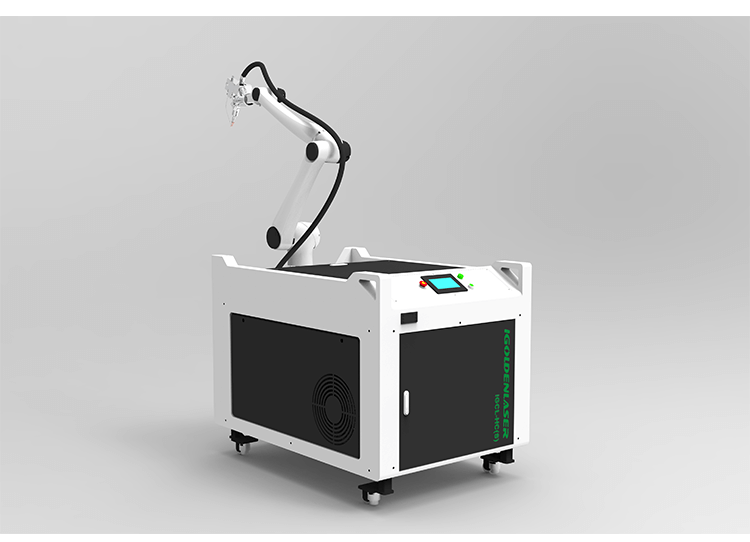 Robotic Welding Basic Definition Robotic welding is an automated manufacturing process where industrial robots perform welding operations under computer control. Unlike manual welding where human operators manipulate welding torches by hand, robotic systems use multi-axis robotic arms programmed to execute precise welding movements automatically. The robot positions the welding torch exactly where needed, maintains optimal angles and distances, controls welding parameters, and follows complex three-dimensional paths with repeatability impossible for human welders. Think of robotic welding as combining a highly skilled welder’s expertise with a machine’s tireless consistency—the robot never fatigues, never has bad days, and reproduces perfect welds identically across thousands or millions of parts. Types of Robotic Welding Processes MIG/MAG Robotic Welding: The most common robotic welding type uses Metal Inert Gas or Metal Active Gas processes. Continuous wire feeds through the welding torch while shielding gas protects the weld pool. MIG/MAG robotic welding dominates automotive manufacturing, general fabrication, and structural welding for its speed, versatility, and economy. TIG Robotic Welding: Tungsten Inert Gas welding produces superior quality welds on stainless steel, aluminum, and exotic metals. While slower than MIG, TIG delivers exceptional aesthetic quality and precision suitable for aerospace components, medical devices, and applications where weld appearance matters critically. Spot Welding Robots: Resistance spot welding robots join sheet metal through localized heating from electrical resistance. Automotive body assembly relies heavily on spot welding robots creating thousands of welds per vehicle assembling body panels and structural components. Laser Robotic Welding: Increasingly popular, robotic laser welding combines robot flexibility with laser welding’s exceptional speed, precision, and minimal heat input. This combination serves demanding applications in automotive, electronics, medical devices, and precision manufacturing. 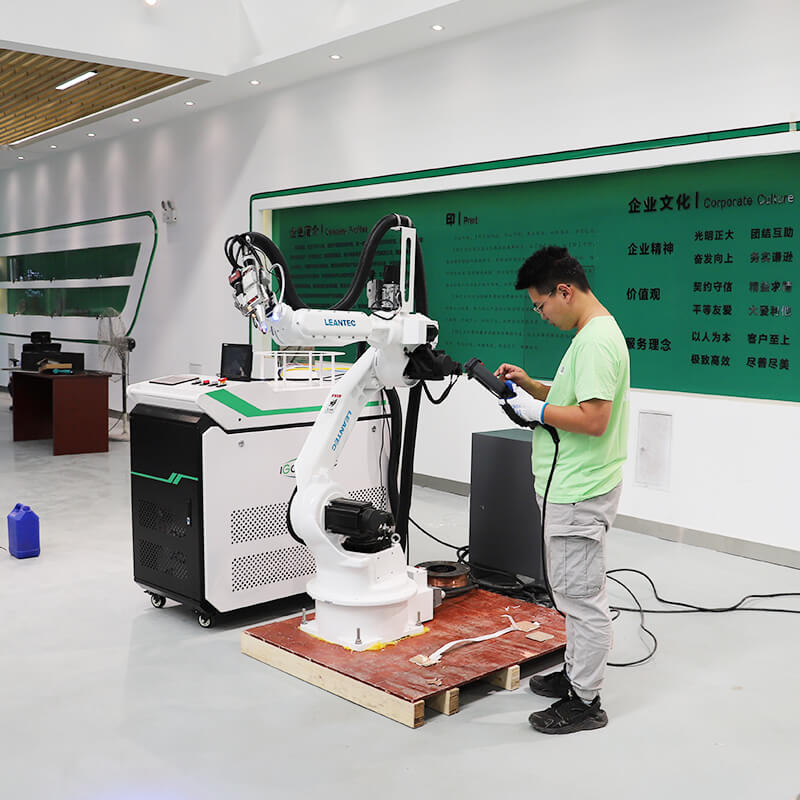 What are the Advantages of Robotic Welding? Robot laser welding machine is a kind welding equipment in modern industrial production. Compared with traditional welding system, robotic laser welding machines have many advantages, such as high precision, high efficiency, environmental protection, energy saving and high reliability. This article will introduce you to the many advantages of the best robotic welding systems in industrial applications. 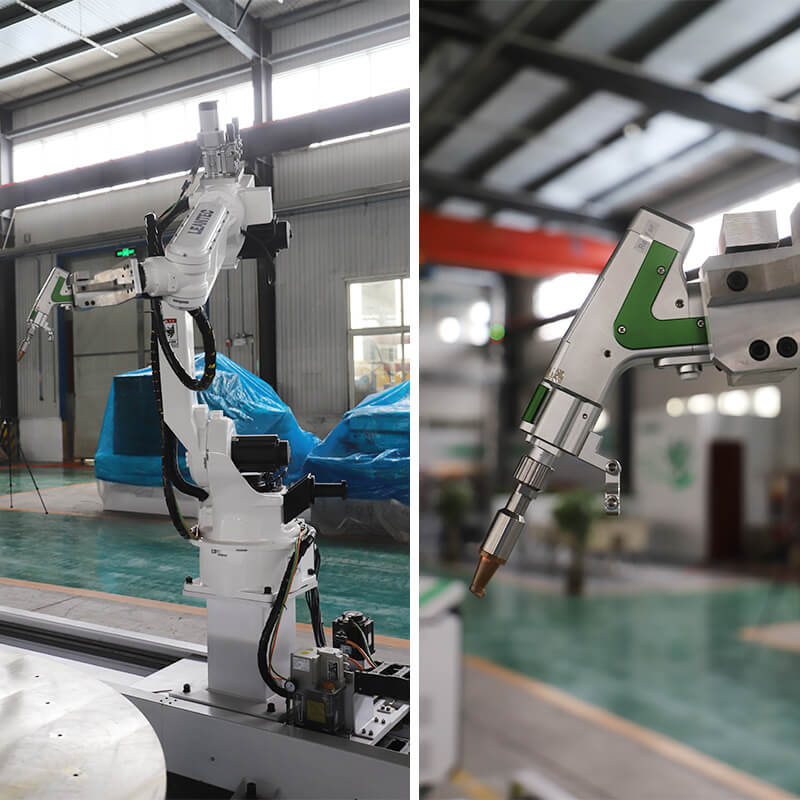 Part 1:What are the Advantages and Disadvantages of Robotic Welding At present, the research of robotic laser welding technology mainly focuses on high power lasers, high beam quality, high energy density laser devices, high efficiency power supply and automatic control technology. Robotic welding systems can help manufacturers and businesses simplify operations, reduce costs and increase production efficiency. Robots can also be a good solution to the shortage of qualified welders 1.1 Advantages of Robotic Welding Robotic welding offers increased productivity, improved weld quality, enhanced safety, cost savings, flexibility, and the ability to collect and analyze valuable data. These advantages make it an attractive option for many manufacturing industries. 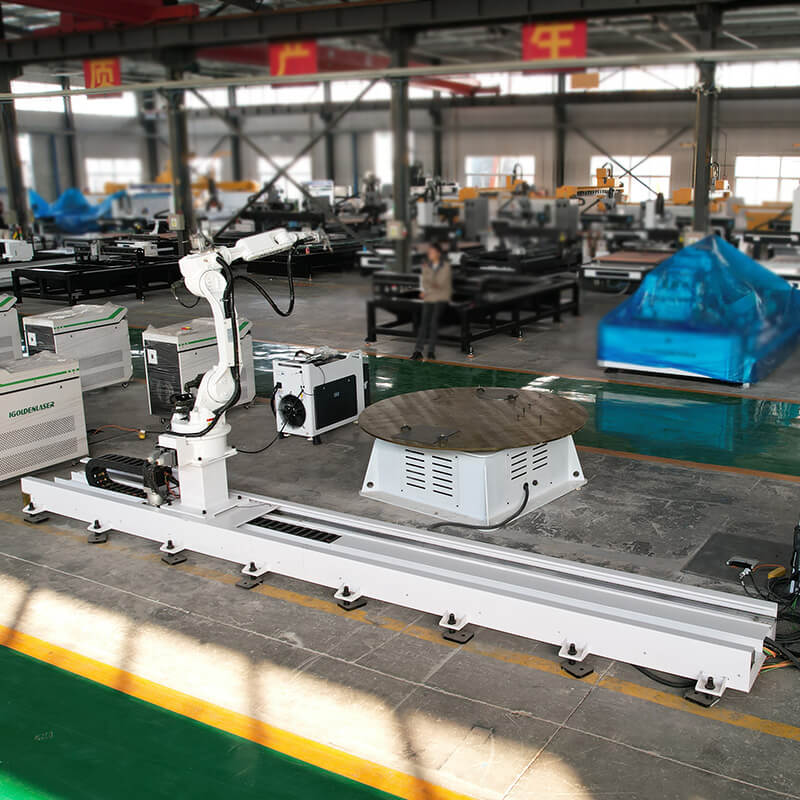 Increased productivity Robots can work continuously without the need for breaks, resulting in higher productivity and increased throughput. They can also perform repetitive tasks with high precision and speed, reducing cycle times and improving overall efficiency. Consistency and quality Robotic welding ensures consistent weld quality as it follows programmed instructions with high accuracy. The robots can maintain a stable arc, consistent heat, and precise weld placement, resulting in stronger and more reliable welds. This reduces the likelihood of defects and the need for rework or repairs. Improved safety By using robots for laser welding tasks, human operators are removed from hazardous environments that involve exposure to high temperatures, fumes, and potentially dangerous welding operations. This improves workplace safety and reduces the risk of accidents and injuries. Cost savings While there are initial investments involved in setting up a robotic welding system, it can lead to long-term cost savings. Robots can work faster and more efficiently than humans, reducing labor costs. The consistent quality also reduces material waste and rework expenses. Moreover, robots can operate continuously, maximizing production time, and increasing overall profitability.  Flexibility and versatility Robotic welding systems can be programmed to handle various welding applications and adapt to different production requirements. They can switch between different parts or welding configurations quickly and easily, allowing for greater flexibility in manufacturing processes. This versatility enables manufacturers to respond quickly to changing market demands and product variations. High Automation & Intelligent Compared with traditional welding, the biggest advantage of robotic laser welding technology is automation. The automatic fiber laser welding robot can be connected with a computer or an on-site controller to realize automatic and semi-automatic control. Many robotic welding systems are equipped with advanced sensors and monitoring capabilities that allow for data collection during the welding process. This data can be analyzed to identify trends, optimize welding parameters, and improve overall process control.
| |
| 8/20/2026 10:29:37 AM |    | |
|
| Thread-Info | |
|---|---|
| Access | Moderators |
| Reading: all Writing: all Group: general | none |
| Forum Overview |
.: Script-Time: 0.039 || SQL-Queries: 7 || Active-Users: 4,809 :.
Powered by ASP-FastBoard HE v0.8, hosted by cyberlord.at